A Manager's Guide to Warehouse Safety: The Power of Professional Floor Markings
A busy warehouse is a complex environment. The constant movement of forklifts, pallet jacks, and personnel is the lifeblood of your operation, but it also presents significant safety challenges. Unclear pathways and poorly marked zones can lead to costly accidents, operational bottlenecks, and potential OSHA violations. For facility managers across St. Charles County and the greater St. Louis area, creating a safe and efficient environment is a top priority. The solution is often right under your feet: professional, durable floor markings.
Effective floor marking is more than just a few lines of paint; it's a visual language that communicates safety protocols, directs traffic flow, and organizes your entire workspace. This guide will walk you through the critical role of warehouse floor markings, from meeting compliance standards to choosing the right materials for long-lasting results.
Why Clear Floor Markings are Non-Negotiable
In an industrial setting, ambiguity is dangerous. Clearly marked floors serve as a constant, silent guide for every person and vehicle in your facility. This simple investment provides a powerful return by directly addressing several key operational pain points.
1. Enhancing Pedestrian and Forklift Safety: The most critical benefit is accident prevention. Designated pedestrian walkways separated from forklift traffic lanes drastically reduce the risk of collisions. Marking off hazardous areas, such as machine perimeters or electrical panels, keeps employees at a safe distance and prevents unauthorized access.
2. Boosting Operational Efficiency: A well-marked floor is an organized floor. When storage areas, loading docks, and staging zones are clearly defined, it eliminates confusion and streamlines workflow. Employees can move materials more quickly and accurately, reducing wasted time and improving overall productivity. This visual organization is fundamental to lean manufacturing and efficient inventory management.
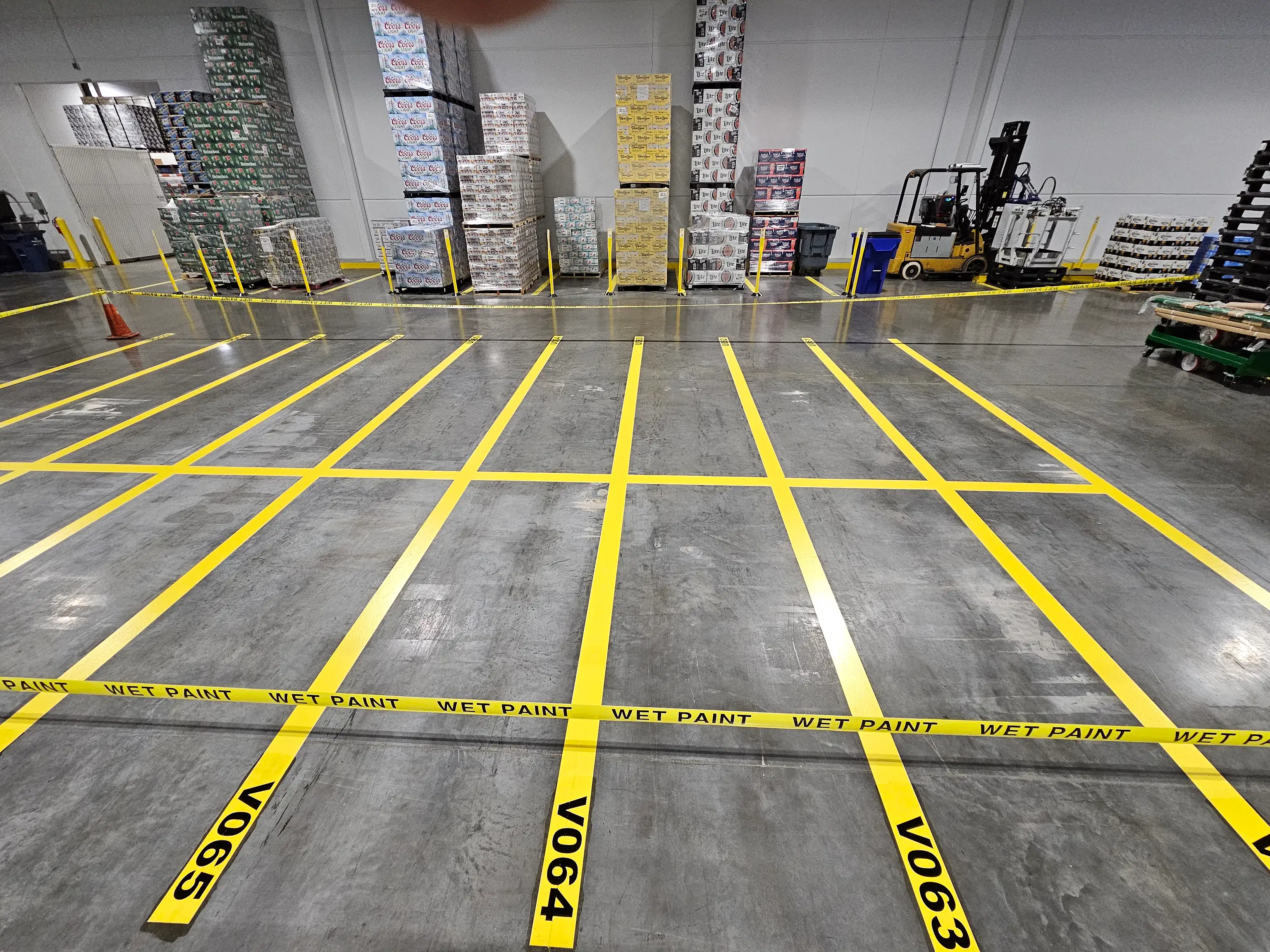
3. Ensuring OSHA Compliance: OSHA standard 1910.22 requires that permanent aisles and passageways be appropriately marked. Failing to comply can result in significant fines and, more importantly, indicates an unsafe work environment. Professional warehouse floor markings are a foundational step in building a culture of safety and ensuring you meet federal regulations.
Understanding OSHA's Color Code for Safety
While OSHA is clear about the need for markings, it provides flexibility in the color system. However, an industry-standard color code has been widely adopted to ensure consistency and immediate recognition. Using this standard demonstrates a serious commitment to safety and is highly recommended.
Here’s a quick breakdown of the most common colors and their meanings:
- Yellow: This is the most common color, used for marking traffic lanes, aisles, and work cells. It provides a high-contrast warning to be aware of vehicle traffic.
- Red: Red signifies danger or fire-related hazards. Use it to outline fire extinguisher locations, sprinkler systems, and emergency stop buttons. It can also mark areas with specific dangers that require immediate attention.
- White: Often used to mark equipment and storage racks that are not otherwise color-coded, such as workstations, carts, and internal staging areas.
- Blue, Green, and Orange: These colors are typically used to distinguish materials and caution areas. For example, blue can mark materials in process, while orange can designate inspection zones or areas with energized equipment.
Beyond floor markings, remember that a comprehensive safety plan includes other visual cues. For instance, ensuring your facility meets OSHA-required industrial pipe color-coding standards is another crucial layer of safety communication.
Choosing the Right Materials: The Difference Between Paint and Performance
A common mistake is using standard traffic paint for warehouse floors. While it may look good initially, the constant abrasion from forklifts, chemical spills, and heavy foot traffic will cause it to fade, chip, and peel within months. This not only looks unprofessional but also negates the safety benefits and requires frequent, costly re-application.
For a truly durable and cost-effective solution, you need materials designed for industrial environments. Two-part epoxy coatings are the gold standard for industrial painting and floor marking. Here’s why:
- Durability: Epoxy creates a hard, thick finish that chemically bonds with the concrete. It is highly resistant to abrasion, impact, and the wear and tear of heavy machinery.
- Chemical Resistance: It stands up to oil, grease, solvents, and other common industrial chemicals that would quickly degrade standard paint.
- Longevity: While the initial investment is higher, the long lifespan of epoxy markings means a lower total cost of ownership. You avoid the repeated labor and material costs associated with frequent repainting.
- Safety: Epoxy coatings can be mixed with aggregates to create a non-slip surface, adding another layer of safety, especially in areas prone to spills.
The Professional Process: Minimizing Disruption, Maximizing Results
Achieving a durable, long-lasting floor marking system requires more than just the right materials; it demands a professional process. At Pound Contracting, we understand that downtime costs you money. Our approach is designed to deliver exceptional results with minimal disruption to your operations.
- Consultation and Layout: We start by understanding your workflow, traffic patterns, and safety goals to help design a clear and effective floor plan.
- Surface Preparation: This is the most critical step. We use industrial equipment like diamond grinders or shot blasters to remove old coatings, oil, and contaminants. This creates a clean, porous surface profile that allows the epoxy to achieve a permanent bond.
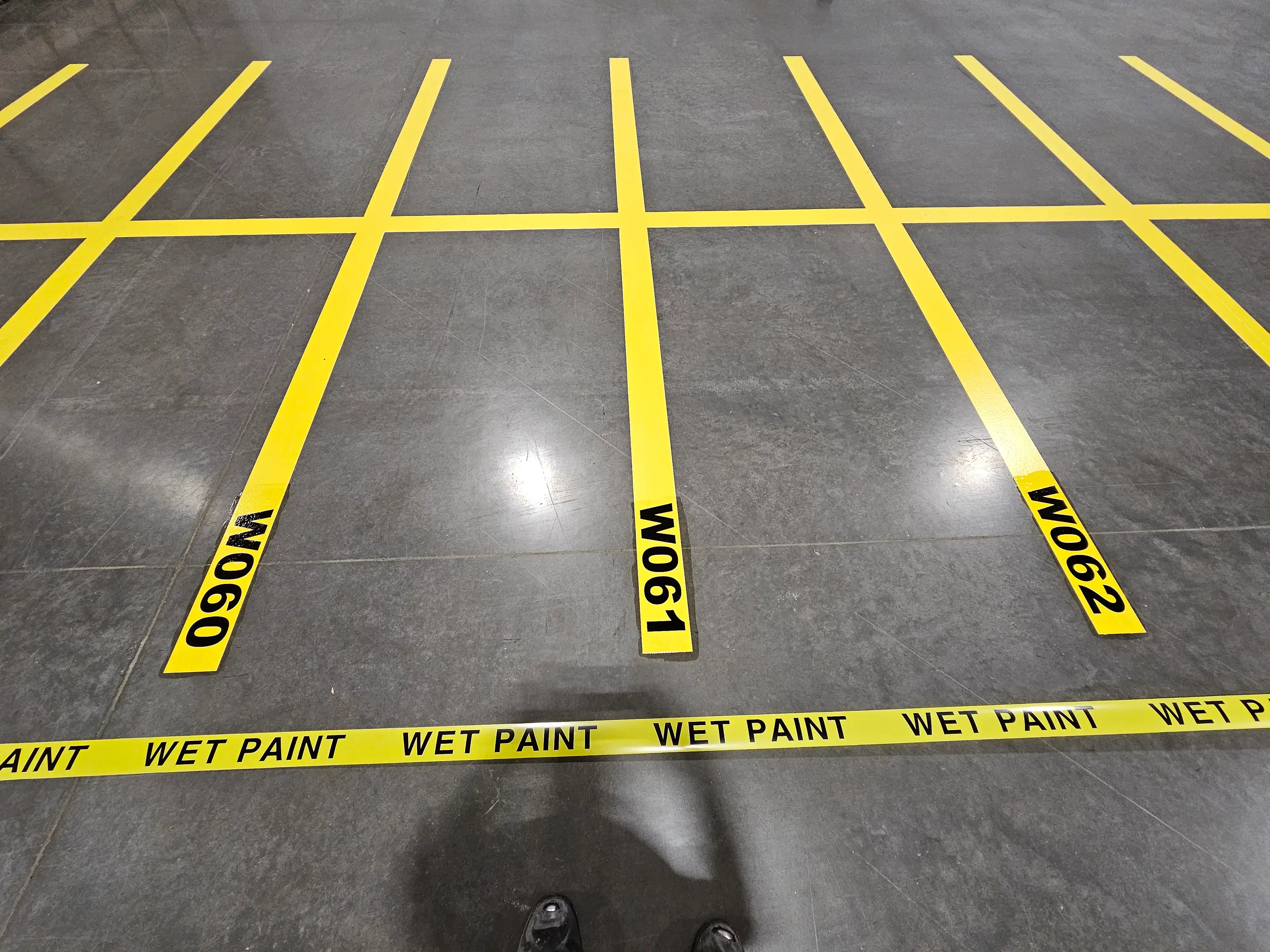
- Precision Application: Our experienced crews use professional equipment to apply crisp, uniform, and accurate lines according to the planned layout. This attention to detail ensures a professional look and clear communication.
- Curing and Scheduling: We work with you to schedule the application during off-hours, weekends, or planned shutdowns to minimize impact on your productivity. We’ll provide a clear timeline for when the floor can return to light and heavy traffic.
This meticulous approach to line striping ensures your investment in safety is one that will last for years to come.
Create a Safer, More Efficient Workspace Today
Investing in professional warehouse floor markings is an investment in the safety of your employees, the efficiency of your operations, and the compliance of your facility. By moving beyond temporary solutions and choosing durable, professionally applied systems, you create a safer environment that protects your team and your bottom line.
If you’re ready to enhance the safety and organization of your facility in the St. Louis area, Pound Contracting is here to help. Contact us today for a free consultation and learn how our expert warehouse floor marking, line striping, and industrial painting services can transform your workspace.